
Olga Zarr.SEO Consultant
and AI SEO Consultant
IN SEO SINCE 2012
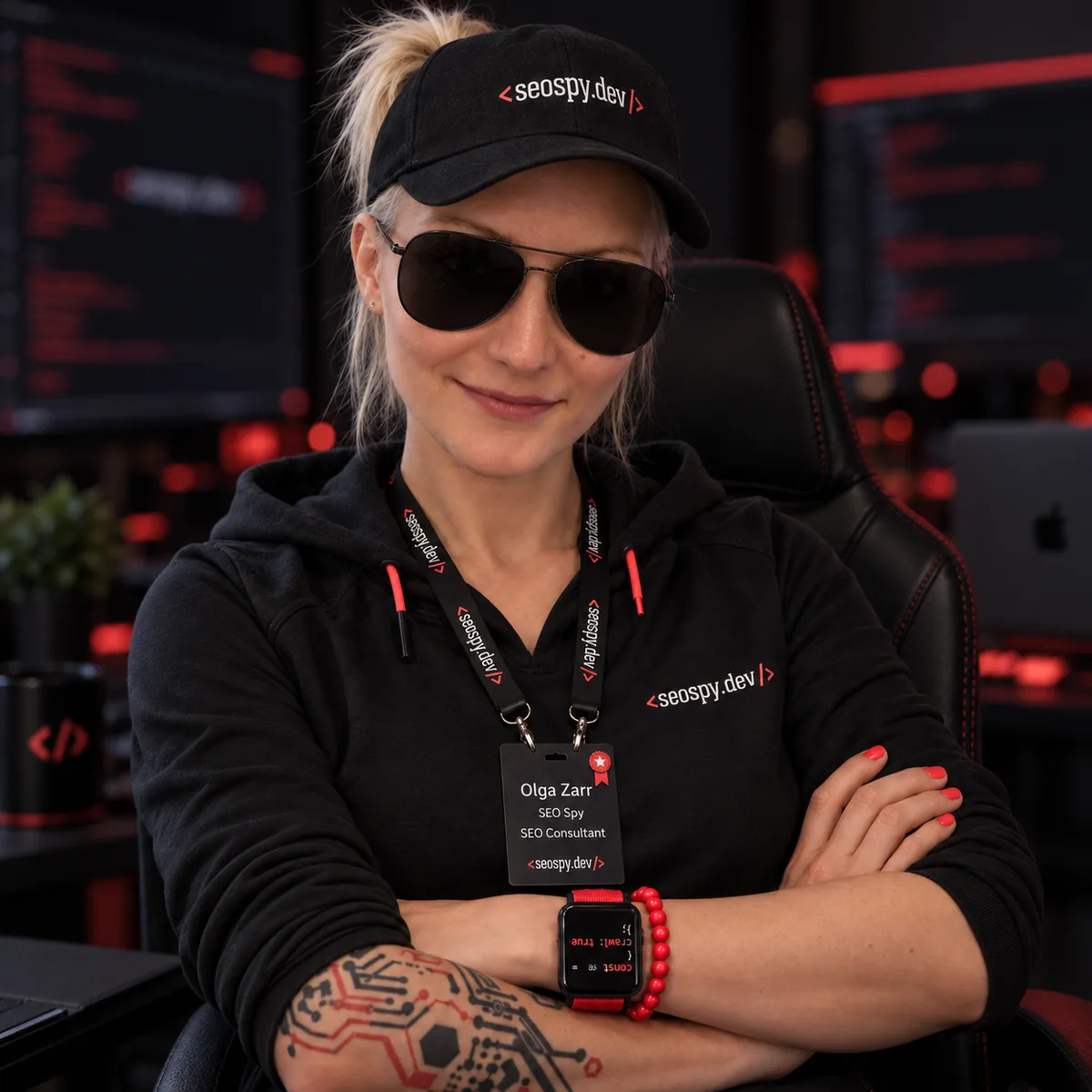
I'm Olga Zarr, an SEO consultant, technical SEO specialist, and founder of SEO Spy, previously known as SEOSLY. I've worked in SEO since 2012, helping businesses understand how their websites are discovered, interpreted, and found in search.
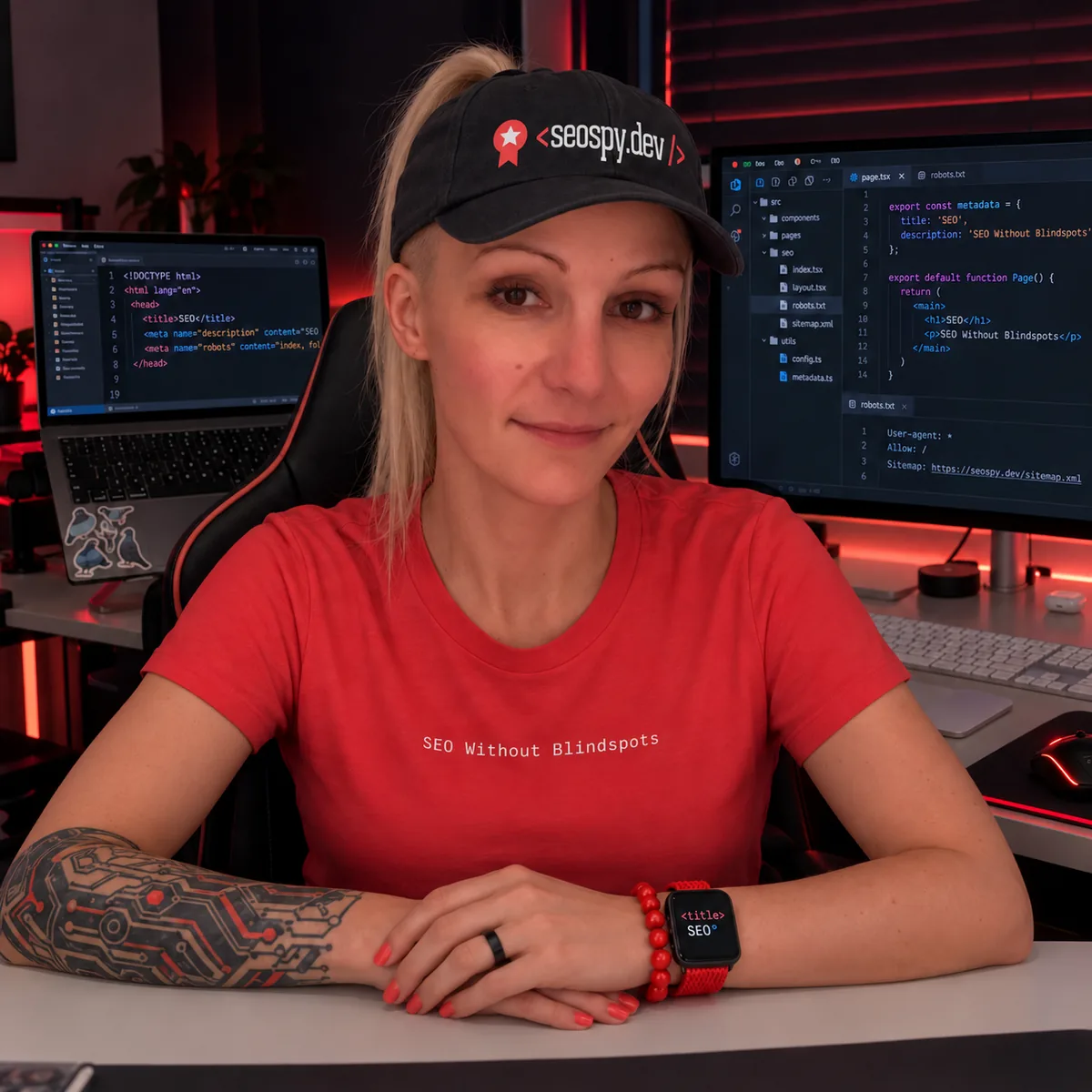
The experience behind the advice.
I began working in SEO in 2012. By the time I started publishing through SEOSLY in 2020, I already had years of practical experience behind me. That distinction matters to my story: becoming more visible in the industry was a later step, not the beginning of my SEO career.
Selected milestones in my professional story:
- 2012–2020: I worked in agency SEO with large and local brands from around the world.
- 2020: I started SEOSLY to publish practical SEO knowledge.
- 2022: I launched my podcast, adding interviews and industry conversations to my educational work.
- 2024: I created SEO Audit Mastery and attended Google Search Central Live Poland.
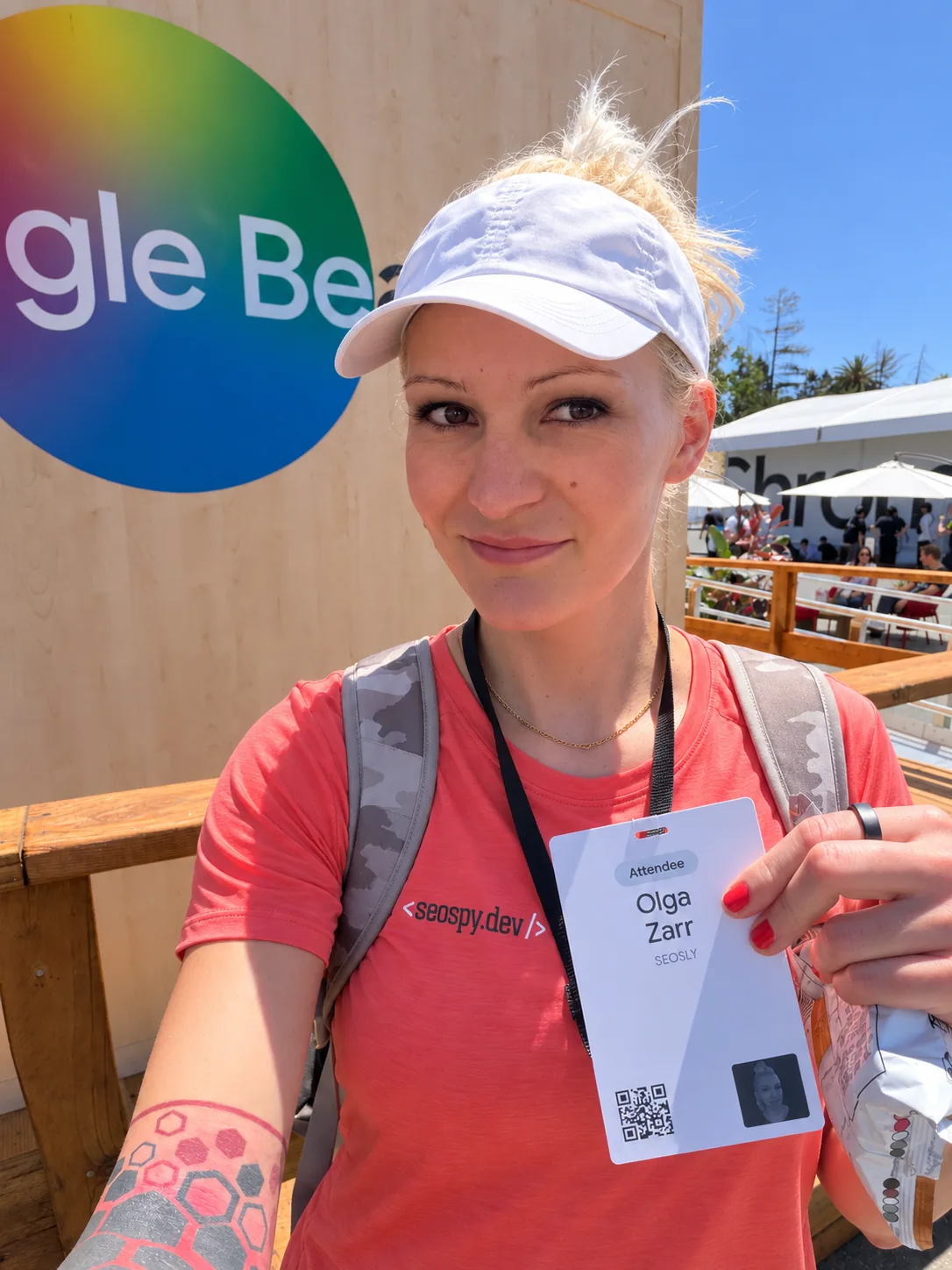
- 2025: I attended Google I/O and explored its search and AI developments firsthand.
- 2026: I returned to Google I/O, continuing to follow developments in search and AI.
- Today: I bring together SEO consulting, AI SEO, technical investigation, and education through SEO Spy.
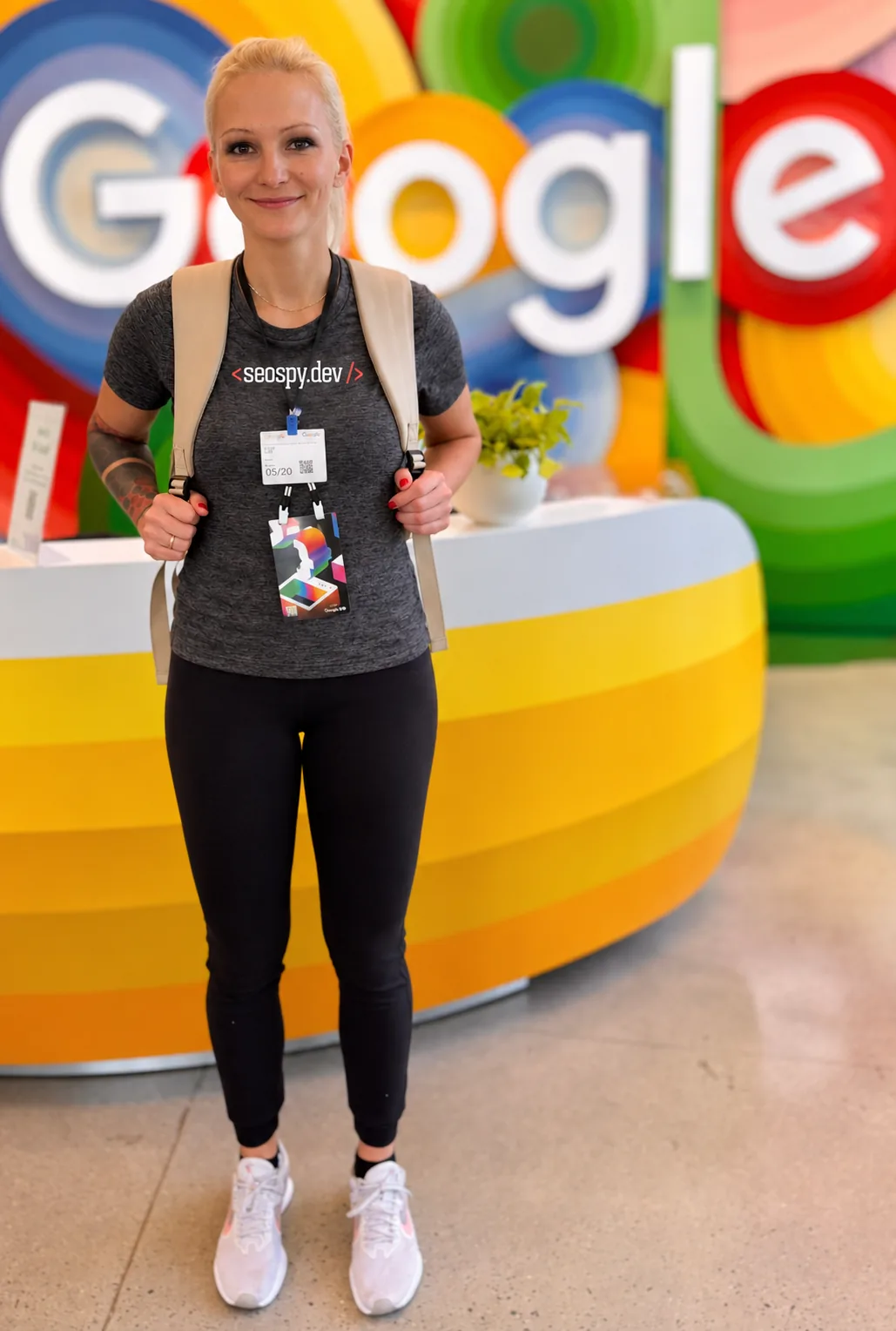
Technical depth. Human judgment.
I connect technical investigation with the decisions a business needs to make. AI expands the questions worth asking; it does not remove the need for sound evidence.
My SEO Career: From 2012 to Independent Consulting and AI SEO
In SEO since 2012. Agency, in-house, leadership, and independent consulting experience.
Much of my work begins with a question that doesn't have an obvious answer.
- Why did organic traffic fall?
- Why are important pages missing from search?
- What went wrong during a migration?
- What does the arrival of AI search actually change for this particular business?
I investigate those questions, explain what the evidence supports, and help turn the findings into work that can be implemented. That is the thread connecting my technical SEO audits, consulting, AI SEO work, writing, and teaching.
This website is a personal introduction to that work: how I became an SEO consultant, the problems I spend my time on, and where you can explore my professional experience. SEO Spy is the home of my consultancy and educational resources.
Here, the focus is on the person behind them.
- SEO practitioner since 2012 — experience built through hands-on work, not only through publishing about SEO.
- Hundreds of in-depth SEO audits — technical investigation across different websites, business models, and platforms.
- Agency, in-house, and SEO leadership roles — experience with both the analysis and the decisions needed to implement it.
- Founder, writer, speaker, and educator — the person behind SEO Spy, formerly SEOSLY, and SEO Audit Mastery.
From 2012 to 2020, I worked in agency SEO for large and local brands from all over the world. My professional background also spans in-house SEO, SEO management and director-level responsibilities, and independent consulting. I've experienced SEO both as the person investigating a problem and as someone responsible for deciding how that work should be prioritized and communicated.
Those settings gave me different views of what makes advice useful.
Agency, In-House, and SEO Leadership Experience
In-house work makes the consequences of a recommendation very concrete. A website has a development backlog, commercial priorities, content owners, and people who need to keep it functioning.
An apparently simple SEO change can touch several teams. Agency work adds a different perspective: similar symptoms can appear across websites with completely different underlying problems.
Agency experience also exposed me to different industries and ways of operating. An ecommerce store, a publisher, and a professional-services business do not need identical SEO advice. Their pages serve different purposes, their teams have different resources, and the consequences of a technical problem can differ considerably.
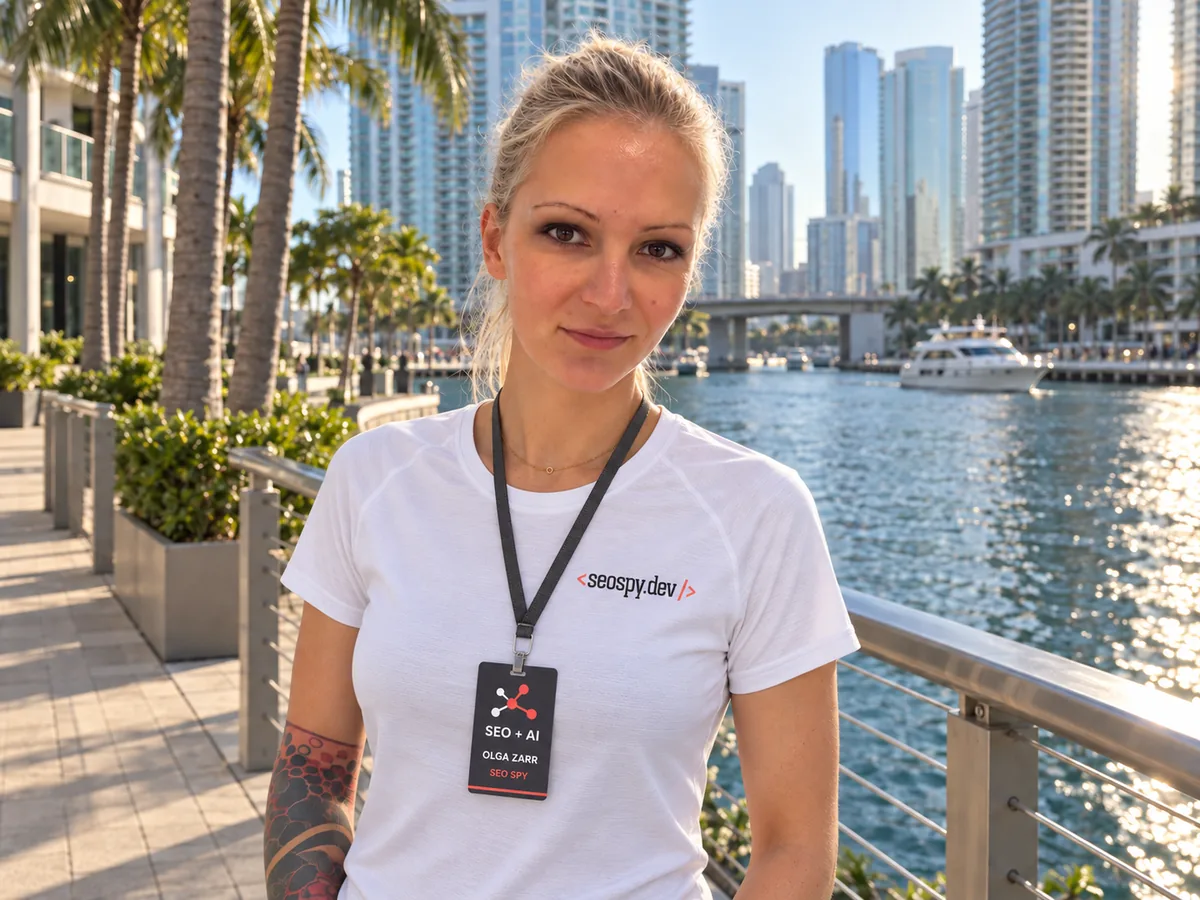
My experience in SEO management and leadership broadened that perspective beyond individual findings. It is one thing to identify a problem; it is another to evaluate its importance, explain the trade-offs, and help people agree on the next step.
That combination of technical detail and senior judgment remains important in my consulting.
Working across those settings helped me become more interested in diagnosis than in following a fixed checklist. A checklist can remind you what to inspect.
It cannot decide whether a finding matters to the website in front of you, or whether it explains the problem you were asked to solve.
Years of Practical SEO Investigation
Over the years, I've carried out hundreds of in-depth SEO audits. That repetition has been valuable, but not because it made every project predictable.
It showed me how often context changes the answer. A technical pattern that deserves immediate attention on one site may be intentional, harmless, or secondary on another.
My work includes crawling and indexing investigations, rendering and JavaScript questions, site architecture, migrations, organic traffic losses, and the relationship between content and search intent. I look at how these issues interact rather than treating the technical and editorial parts of a website as separate worlds.
This is the experience I bring to AI SEO as well. I am not starting again with a new job title. I am extending an established practice to include new search experiences, new questions about visibility, and new ways to use AI responsibly during research and analysis.
From SEOSLY to SEO Spy: Sharing the Work
I started SEOSLY in 2020 as a place to share the practical knowledge I was developing. Writing about audits, tools, and technical SEO made me explain my reasoning more clearly. Publishing also opened the door to conversations with other practitioners, teaching, interviews, and conference speaking.
SEO Spy continues that work with a clearer emphasis on investigation and evidence. The name fits the part of SEO I enjoy most: looking closely enough to notice what has been missed, then making the findings understandable.
Becoming independent also meant taking responsibility for the judgment behind my advice, not just completing an assigned part of a project. I've written about that transition in my Search Engine Journal article on becoming an independent SEO consultant.
My career has changed shape, but the practical work of understanding websites remains at its center.
Technical SEO Is Where I Look Beneath the Surface
Technical SEO appeals to me because it makes you examine the difference between what a website appears to do and what it actually does. A page can look perfectly normal in a browser while presenting a very different situation to a crawler, a rendering system, or a search index.
I work with crawling, rendering, indexing, canonicalization, redirects, internal linking, structured data, and site architecture. These are not isolated boxes to tick. They interact with the content, templates, navigation, and commercial purpose of a website.
Consider an ecommerce category that has lost visibility. As an illustrative example, the problem might involve a changed canonical, weaker internal links, unavailable products, a shift in search intent, or several changes happening together.
Rewriting the category description would not resolve every one of those possibilities. Neither would fixing every warning in a crawl report.
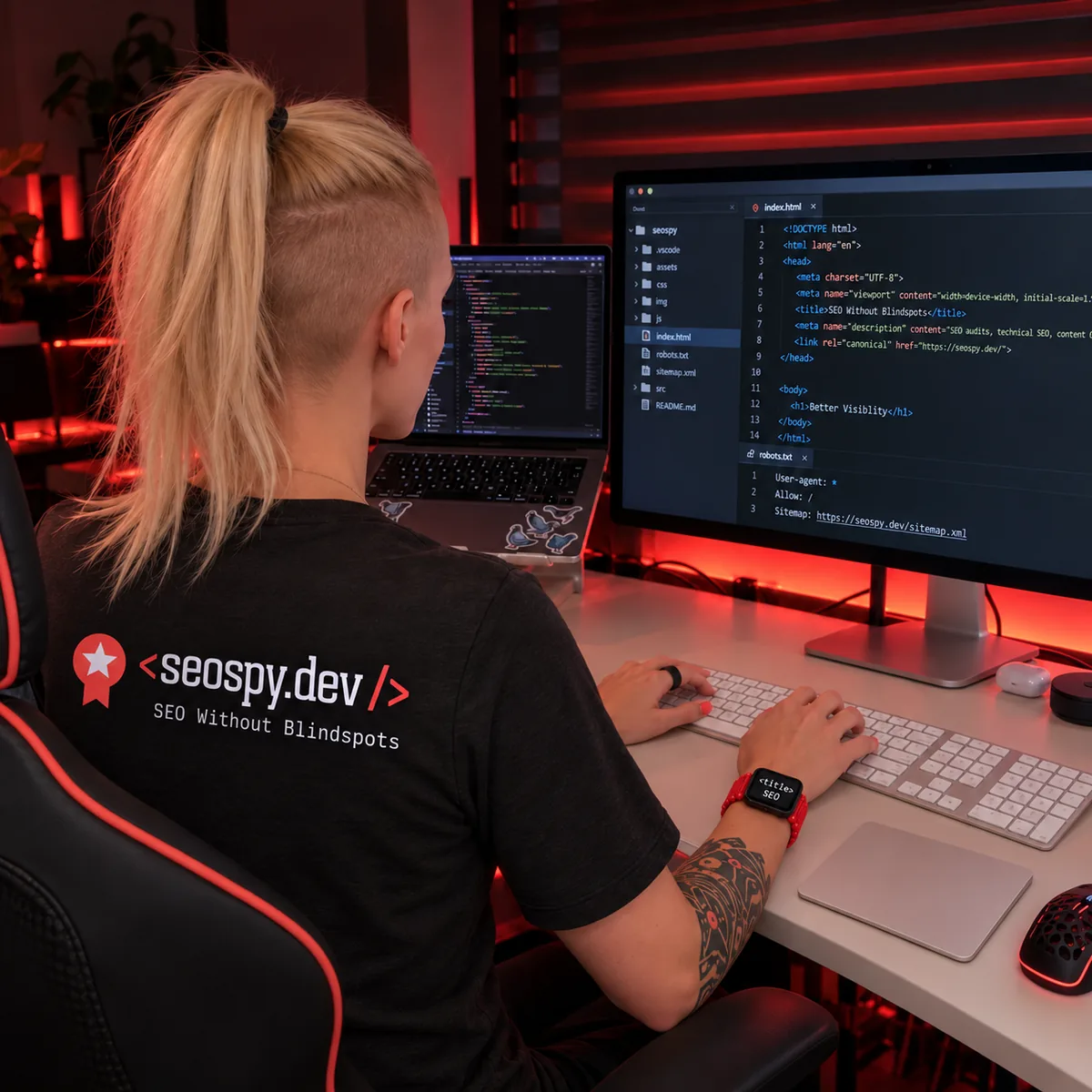
That is why I want to know what changed, which URLs are affected, and what evidence would distinguish one explanation from another. A useful technical SEO investigation connects the behavior of the website with the outcome being observed.
I also care about how the findings reach the people implementing them.
- Developers need examples and requirements they can reproduce.
- Content teams need to understand the purpose of a page.
- Business owners need to know what deserves attention and what can wait.
A technically accurate observation is only part of the job. The other part is making it useful enough that someone can act on it and check whether the change worked as intended.
Why AI SEO Is Part of My Work, Not a Separate Discipline
My work as an AI SEO consultant has developed naturally from my existing SEO practice. Search is changing, people are asking questions in new interfaces, and businesses want to understand their visibility in places such as ChatGPT, Claude, Gemini, and Google's AI search experiences.
At the same time, AI is changing how I carry out parts of the work itself. Those are two related developments, but they are not the same thing. Using AI to help analyze a website does not automatically make that website more visible in an AI-generated answer.
AI Search Visibility Starts With Understanding the Website
When I investigate AI search visibility, I begin with the business, its audience, and the information the website makes available.
- Can important content be reached?
- Is it clear what the business does?
- Does the page answer a real question with something useful and trustworthy?
- Are claims supported by evidence?
For Google's AI features, the connection with established SEO is explicit:
“The best practices for SEO remain relevant for AI features in Google Search”
That guidance informs my approach to Google, but I don't assume that every other platform works identically. Different systems have their own documentation, access arrangements, and ways of presenting information. I separate what can be checked from what is inferred through observation.
I am interested in whether a business is represented accurately and usefully, not simply whether its name appears in one answer. A single chatbot response is an observation, not a reliable measure of overall visibility.
Measurement needs a defined scope, a record of what was tested, and honest limitations.
AI-Assisted SEO Still Needs an Accountable Consultant
I also use AI to support research, organize information, explore patterns, and assist with parts of analysis and quality assurance. It can help me work through material more efficiently and develop questions worth investigating.
But an AI-generated explanation is not proof of the cause of a traffic drop. A plausible recommendation is not automatically suitable for a particular website. Sources, examples, and outputs still need to be checked, especially when a proposed change could affect many pages.
For me, being an AI SEO consultant means combining established SEO knowledge with careful study of new search behavior and responsible use of new tools. It does not mean offering guaranteed citations or treating every new acronym as a separate service.
The systems change; responsibility for the advice stays with me.
The SEO Consulting Work I Do
My consulting covers both focused investigations and longer-term guidance. The scope depends on the question, the website, and the team's ability to implement changes. These are the main areas of my professional work.
Choose a service to explore the detail.
In-Depth SEO Audits An audit examines how technical systems, content, architecture, and search performance fit together.

I look beyond a list of individual issues to understand the patterns affecting the site. The useful outcome is a supported diagnosis and a sequence of priorities, with enough detail to guide implementation.
Technical SEO Consulting This work focuses on how a website is built, accessed, rendered, and organized.
It can involve JavaScript, indexing, canonical signals, redirects, internal links, templates, or structured data. I explain the expected behavior, identify examples that don't match it, and help define a practical correction.
Website Migration Support Migrations can change more than URLs.
They may also change content, navigation, templates, rendering, and the relationships between pages.
My role can include reviewing requirements, mapping decisions, testing before launch, and checking what happened afterward. The purpose is to identify and reduce avoidable risk, not promise a fluctuation-free move.
Organic Traffic-Drop Investigations A decline is a starting point for investigation, not a diagnosis.
I examine timing, affected pages and queries, tracking reliability, site changes, and the wider search context.
I distinguish supported explanations from possibilities that still need testing, rather than attributing every loss to an algorithm update or AI.
AI SEO Consulting I help businesses make sense of AI-search visibility alongside their existing SEO work.
That includes assessing technical access, content clarity, first-hand evidence, the accuracy of their public information, and realistic measurement. I also advise on using AI within SEO workflows without removing source verification or human review.
Ecommerce SEO For online stores, I work with category and product relationships, filters, variants, internal linking, indexation, and search intent.
Recommendations need to account for how the catalog actually operates. Stock changes, overlapping categories, and platform limitations can matter as much as the wording on an individual page.
Content and Information Architecture I examine which pages a website needs, what each page is meant to answer, and how those pages connect.
Sometimes the answer is new content.
Sometimes it is a clearer structure, an improved existing page, consolidation, or a decision not to create another page competing for the same purpose.
Ongoing SEO Advisory and Second Opinions Some teams need a consultant to help evaluate decisions over time rather than deliver a single audit.
I can contribute senior technical judgment, review recommendations, discuss priorities, and assess implementation. A focused second opinion can also help clarify a disputed explanation or a proposed course of action.
These areas often overlap. A migration review may reveal an architecture problem; a traffic investigation may lead to technical work. I prefer to describe the actual problem before deciding what label belongs on the project. SEO Spy provides the wider context for my consulting work.
How I Turn SEO Evidence Into a Practical Decision
My process is structured, but it isn't identical for every website. I need a clear question before I can decide which data, tools, and checks will help answer it.
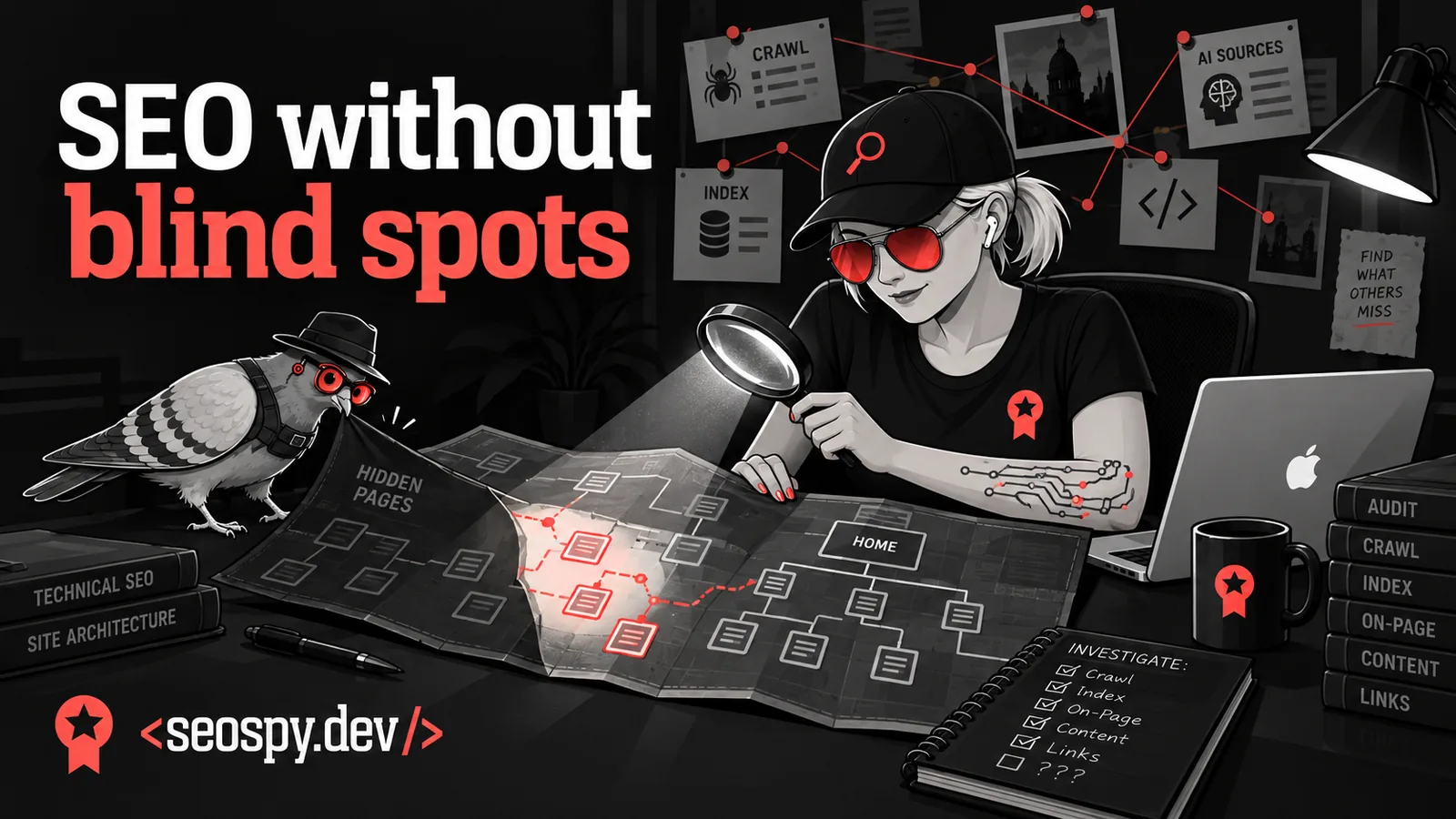
- Define the problem. I establish what the business is observing, what has changed, and which part of the website or audience matters. A sitewide headline can hide very different patterns underneath.
- Check the evidence. Search Console, analytics, crawl data, page behavior, and implementation history offer different views. I look for gaps or contradictions before treating them as one consistent story.
- Develop and test explanations. I separate what is directly observable from my interpretation. Where several explanations fit, I identify the additional checks that would make the distinction clearer.
- Prioritize the next actions. Findings need to be weighed against likely significance, confidence, dependencies, and implementation effort. A long issue list is not a substitute for that judgment.
- Review what changed. Implementation needs its own checks. I then examine the relevant signals over time, without assuming that every subsequent movement was caused by the work.
This is also how I approach uncertainty. If the evidence cannot establish a single cause, I say so.
That does not make an investigation useless. It can still rule out weak explanations, identify a sensible next test, and prevent a team from committing to an expensive but poorly supported change.
The explanation should be understandable to the person making the decision. I don't want a client to need another consultant simply to translate my findings.
Different Businesses Need Different SEO Advice
My experience includes work across ecommerce, publishing, affiliate websites, legal and professional services, and other business websites. I work with international clients and with people who approach SEO from different starting points: business owners, in-house specialists, marketing leads, developers, and content teams.
A smaller business may need to understand a handful of important pages and choose what to do first. A larger organization may need to understand how one template or platform decision affects thousands of URLs. Both require careful reasoning, but the implementation constraints are very different.
I take those constraints seriously. Advice that depends on resources a team does not have is unlikely to be useful without a realistic sequence. Equally, a quick workaround may be inappropriate when it creates a larger architectural problem later.
I therefore spend time understanding how a website is maintained, who owns the relevant decisions, and what can actually change. That context is part of SEO consulting, not an administrative detail separate from it.
Where You Can Read and Hear My SEO Work
Writing and education
- Search Engine JournalTechnical SEO, auditing, and consulting.
- Wix SEO Learning HubPractical guides and SEO education.
- MajesticSEO testing, fundamentals, and AI SEO.
Speaking and learning
- SMX AdvancedSpeaker: advanced Google Search Console reporting.
- SEO Mastery SummitSpeaker: the SEO audit process.
- Google I/O 2025 and 2026Attendee, exploring developments in search and AI.
I prefer people to be able to examine my work rather than rely only on a professional description. Writing and speaking create a public record of the topics I study, the questions I ask, and how I explain them.
My Search Engine Journal author page brings together articles on technical SEO, auditing, consulting, and related subjects. One recurring theme is the need to interpret tools rather than follow them mechanically.
My article on SEO crawling tool warnings and errors explores that distinction: a reported warning needs context before it becomes a task.
I've also contributed to Wix SEO Learning Hub. My guide to getting started with an SEO site audit is an example of the practical educational work I enjoy. The aim is to help readers understand what they are investigating, not simply introduce another checklist.
My contributions to Majestic's educational series include SEO testing and experimenting and succeeding in AI SEO with SEO fundamentals. Those topics reflect a consistent interest: learning through practical work while checking whether a new idea changes the underlying problem.
I've taken part in conversations and webinars beyond my own channels, including Majestic's session on using Google Search Console. These references document contributions and appearances. They are not claims that the publishers endorse my consultancy or guarantee its results.
Older publications may introduce me through SEOSLY. That is part of my professional history; SEO Spy is the brand through which I now present my consulting and educational work.
What I Bring Back From SEO Conferences and Google I/O
Speaking and attending events contribute to my work in different ways. Preparing a talk forces me to organize a method so another practitioner can follow it. Attending creates space to ask questions, compare experiences, and look beyond the websites currently on my desk.
I've spoken at SMX Advanced about advanced Google Search Console reporting and at SEO Mastery Summit in Saigon about the SEO audit process. These are subjects I know through practical work and enjoy explaining in detail.
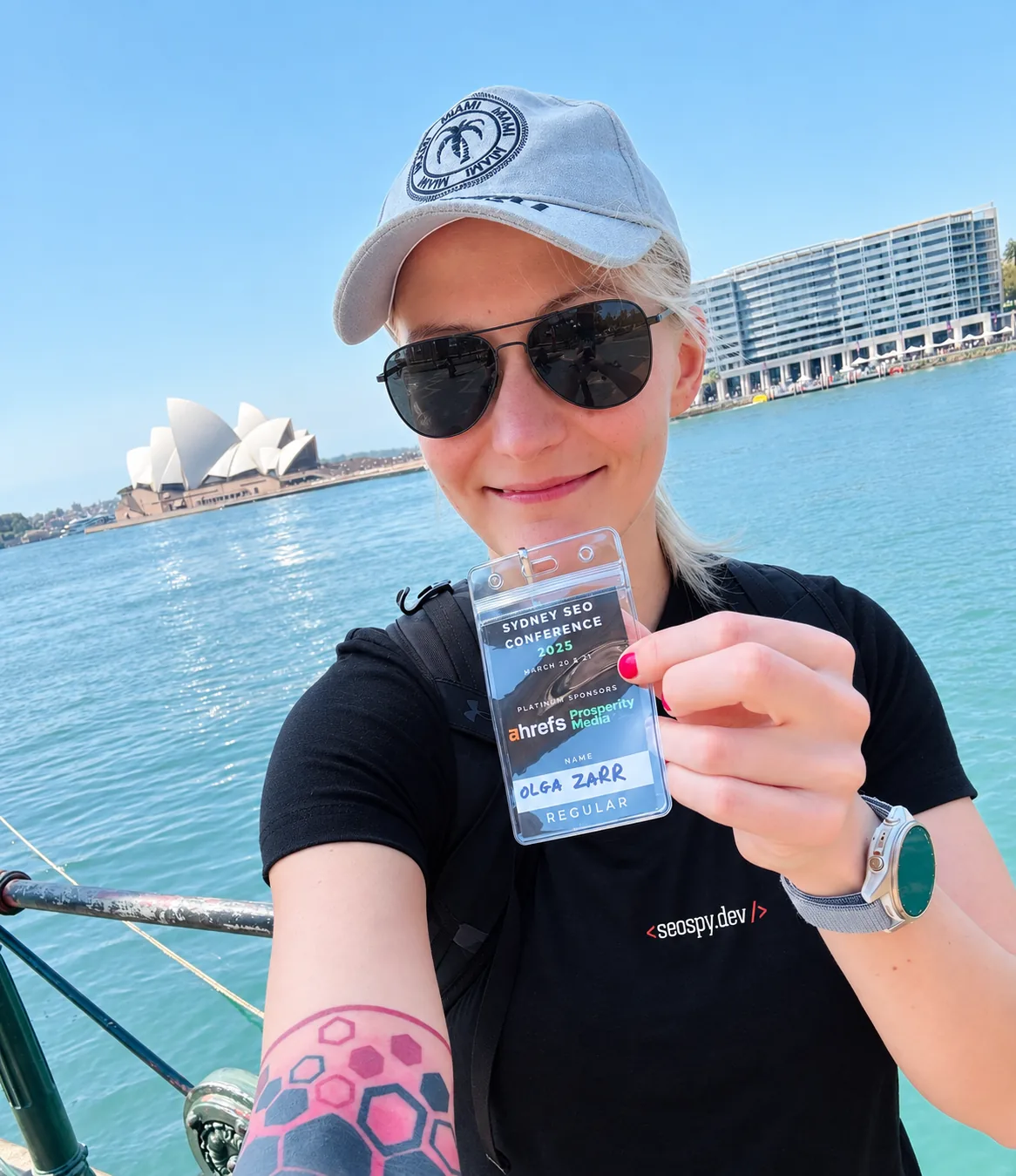
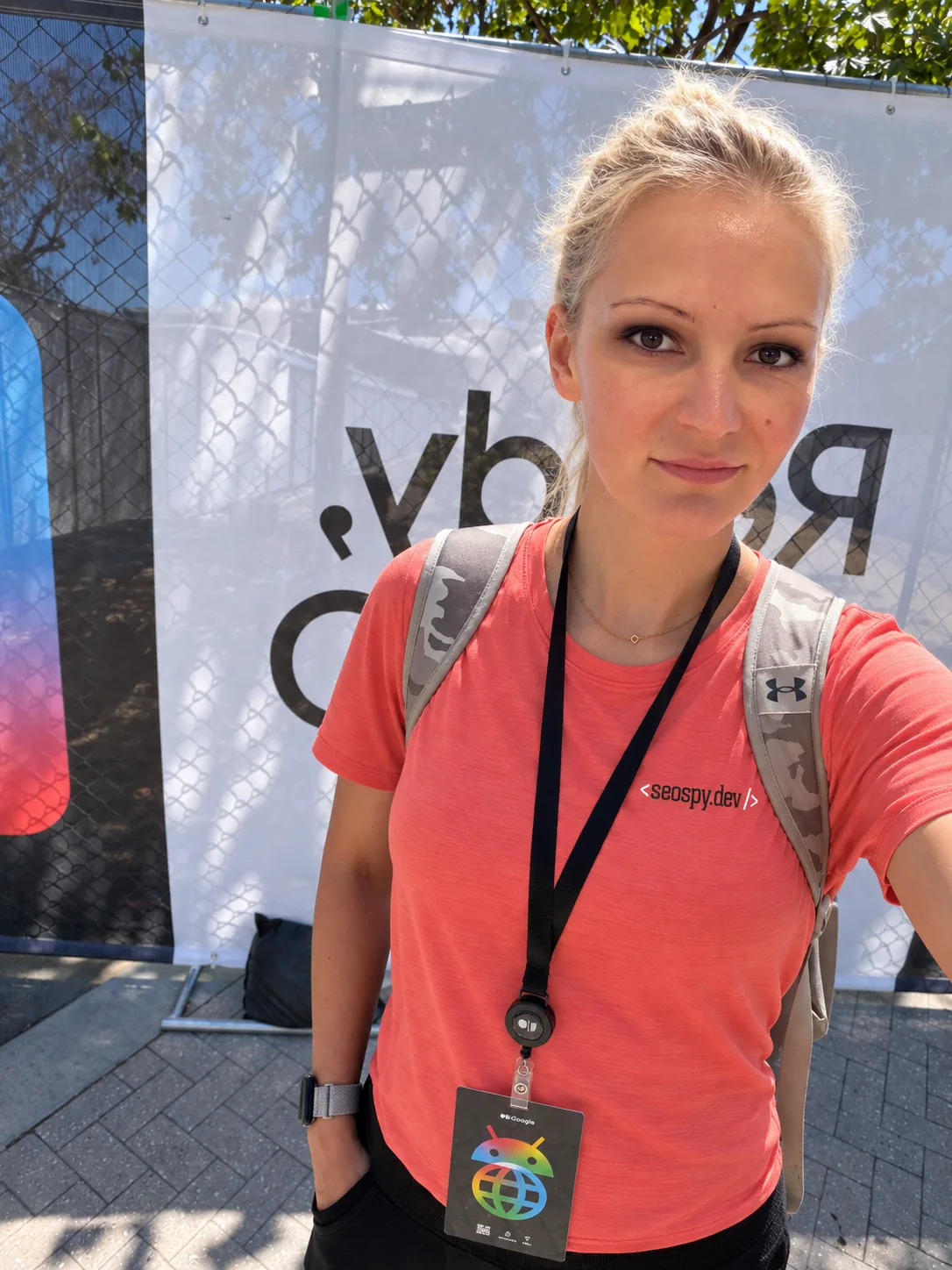
My wider conference experience includes brightonSEO and Google Search Central Live Poland in 2024. I also attended Google I/O in 2025, where I explored the search developments being presented, including AI Mode, and wrote about their implications for SEO. I returned to Google I/O in 2026.
Experiencing an announcement firsthand gives me useful context, but it does not remove the need to read the documentation or observe what happens afterward. A demonstration, a product announcement, and an established pattern across real websites are different kinds of evidence.
I make that distinction deliberately. Speaking at an SEO event and attending a Google event are not interchangeable credentials. Neither means that I speak on Google's behalf, hold privileged access to ranking systems, or can promise an outcome.
What matters to me is what I learn and how it improves my questions. The most useful conference insight is often something I can investigate more carefully when I return to the work.
Sharing What I Learn Through SEO Spy
Education is a substantial part of my professional life. Consulting helps me encounter difficult questions; teaching requires me to explain how I think through them. I enjoy that exchange because neither activity lets me rely comfortably on vague language.
I share practical material through articles, videos, the SEO Spy Watch newsletter, the SEO Spy Podcast, and courses. The formats serve different purposes.
- A detailed article can work through a technical issue carefully.
- A video can demonstrate a process.
- An interview makes room for a perspective that differs from my own.
I launched my podcast in 2022. My interviews have included conversations with practitioners and industry figures such as Barry Schwartz, Aleyda Solis, Martin Splitt, and Lily Ray.
I value being able to ask not only what someone recommends, but why they recommend it and where the limitations are.
In 2024, I created SEO Audit Mastery, bringing my audit approach into a course format. Auditing is a particularly useful subject to teach because the difficult part is rarely finding something that looks unusual. It is deciding whether that finding matters and explaining what should happen next.
My educational work also includes AI SEO. I want to help people understand how search is evolving without suggesting that they must abandon everything they already know. The useful question is what needs to be learned, tested, or adapted for the situation in front of them.
You can explore my resources through SEO Spy. This personal website brings the professional background together; the main site is where those individual areas of work can be explored further.
What I Mean by Being an SEO Expert
I use the term SEO expert to describe a field of experience, not a claim to know everything. Search involves changing systems, incomplete information, and business decisions that cannot always wait for perfect certainty.
For me, expertise means being able to ask better questions, recognize patterns without assuming they are universal, and explain the strength of the evidence. It also means acknowledging when a conclusion is provisional or when another specialist should be involved.
Google discusses experience, expertise, authoritativeness, and trustworthiness in its guidance on helpful content. Its emphasis on trust is worth keeping in view:
“Of these aspects, trust is most important.”
I don't treat E-E-A-T as a badge or a standalone score. On a professional website like this one, useful evidence includes an identifiable person, a clear account of their experience, published work people can examine, and claims that remain within what can be supported.
That standard applies to my own work too. I can take responsibility for the quality of an investigation and the reasoning behind a recommendation. I cannot control a search engine's decisions or guarantee rankings, recovery, leads, or inclusion in an AI answer.
Questions About Olga Zarr and Her SEO Work
What Is the Relationship Between Olga Zarr, SEO Spy, and SEOSLY?
I'm the person behind SEO Spy. SEOSLY was the earlier brand through which I shared SEO resources and developed my independent professional presence.
This website is my personal profile; SEO Spy is the home of my consultancy and educational work. Historical author biographies and interviews may still use the SEOSLY name.
Do You Work as Both an SEO Consultant and an AI SEO Consultant?
Yes. I see AI SEO as an extension of my SEO work, with additional questions about AI-search visibility and the responsible use of AI in the process.
The balance depends on the website's needs. A business asking about chatbot visibility may still have technical, content, or measurement problems that need attention first.
Is Your Work Only About Technical SEO?
No. Technical SEO is a major area of my expertise, but it connects with content, search intent, site architecture, and business priorities.
I might investigate a rendering problem in one project and help a team decide how to organize its service pages in another. The problem determines the scope.
Can People Contact You About Education or Industry Contributions?
Yes. My professional work includes teaching, writing, interviews, and speaking as well as consulting.
You're welcome to contact me with context about an educational project, a relevant industry conversation, or a question about my work. For a website-related inquiry, including the URL and the question you're trying to answer is helpful.
Contact Olga Zarr
For consulting, an educational project, an interview, or a conversation about my work, email is the simplest way to reach me.
Your email app opens only when you select the revealed address.
If you're writing about a website, include its address and the question you're trying to answer. A little context helps me understand what you need.
My consulting and educational work lives at SEO Spy. This website is my personal introduction.
Back to the introduction ↑